
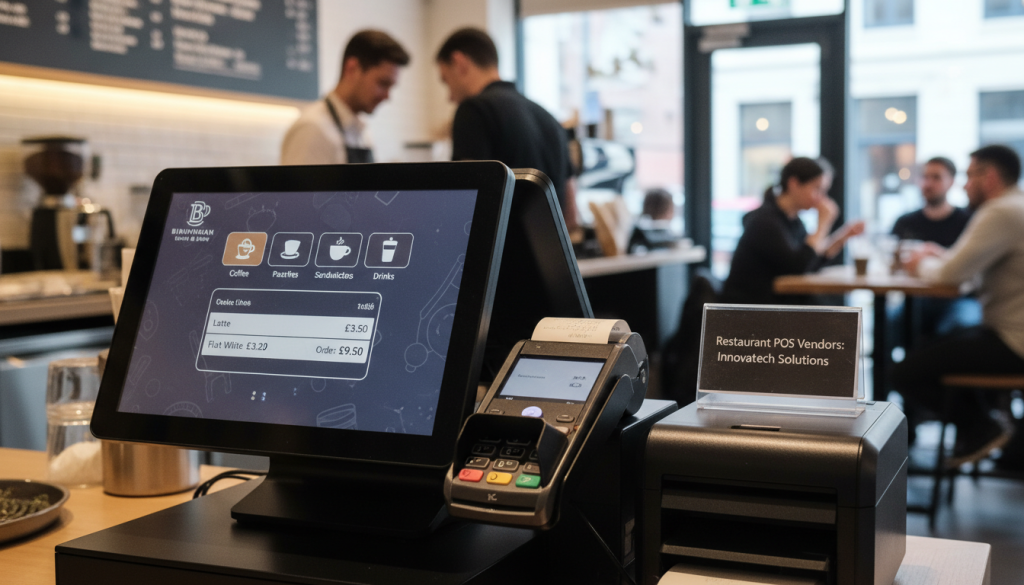
In the vibrant, fast-paced world of the hospitality industry, a restaurant is much more than a place where food is served. It is a complex ecosystem where timing, communication, and atmosphere must align perfectly to create a memorable experience. For the modern restaurateur, the challenge isn’t just about crafting a perfect menu; it’s about managing the invisible threads that hold the operation together. At the center of this coordination is a vital piece of technology: the epos for restaurant.
Gone are the days when a point-of-sale system was merely a glorified cash drawer. Today, the demands of the digital-first diner and the pressure of rising operational costs have transformed the role of technology in the dining room. A professional epos for restaurant has become the digital backbone of the business, turning chaotic service periods into streamlined, profitable shifts.
Bridging the Gap Between Kitchen and Table
The most critical moment in any service is the handoff—the transition of a guest’s desire into a chef’s directive. In a high-pressure environment, verbal commands or handwritten notes are prone to the “telephone game” effect, leading to incorrect orders and wasted ingredients.
A high-quality epos for restaurant solves this by providing a direct, instantaneous link between the front-of-house staff and the kitchen. When a server inputs an order into a handheld terminal or a sleek countertop unit, it is immediately categorized and displayed on a Kitchen Display System (KDS). This ensures that modifiers—like “no onions” or “medium-rare”—are never missed, preserving the human touch of personalized service without the risk of human error.
Data: The Secret Ingredient for Growth
Beyond the immediate bustle of the dinner rush, the true power of a modern epos for restaurant lies in its ability to capture data. For decades, restaurant owners had to rely on “gut feeling” to decide which dishes to keep or when to staff up. Today, data provides a clearer picture.
Modern systems allow owners to perform deep-dive menu engineering. By analyzing which items are “stars” (high profit, high popularity) and which are “dogs” (low profit, low popularity), managers can make informed decisions about their offerings. Furthermore, an epos for restaurant tracks inventory in real-time. When a steak is sold, the system automatically deducts that portion from the stock, alerting the chef before a “sold out” sign has to be awkwardly explained to a guest.
Enhancing the Human Element of Hospitality
It might seem counterintuitive, but better technology actually makes a restaurant feel more human. When staff aren’t bogged down by manual calculations, running back and forth to a stationary till, or squinting at messy handwriting, they have more time to interact with their guests.
A sophisticated epos for restaurant facilitates table-side ordering and lightning-fast payments. Whether a group wants to split a bill by item or simply divide the total by five, the software handles the complexity in seconds. This eliminates the “friction” at the end of a meal, ensuring the guest’s final memory of the evening is one of relaxation, not frustration.
Adapting to the New Normal
The hospitality landscape has shifted significantly in recent years. Takeaway, delivery, and click-and-collect are no longer optional extras; they are core revenue streams. A professional epos for restaurant integrates these various channels into a single interface. Instead of having multiple tablets pinging from different delivery apps, all orders flow into one central hub. This prevents the kitchen from becoming overwhelmed and ensures that in-house diners and delivery customers receive the same high standard of service.
Reliability and Resilience
The environment of a professional kitchen is unforgiving. Heat, steam, and spills are daily occurrences. This is why investing in industry-grade hardware is essential. A standard consumer tablet isn’t built for a twelve-hour shift in a hot kitchen, but a dedicated epos for restaurant is designed for durability. Moreover, with cloud-based architecture, your data is always safe. Even if a local internet connection wavers, modern systems often feature “offline modes” that allow service to continue uninterrupted, syncing back to the cloud once the connection is restored.
The Final Word
For those looking to stay competitive in an increasingly crowded market, the choice of technology is a defining factor. An epos for restaurant is no longer just a tool for taking money; it is a platform for growth, a guardian of efficiency, and a partner in providing exceptional hospitality. By embracing these digital solutions, restaurateurs can ensure their business remains as sharp as their knives and as welcoming as their front door.
